Is Monero Gambling Legal?
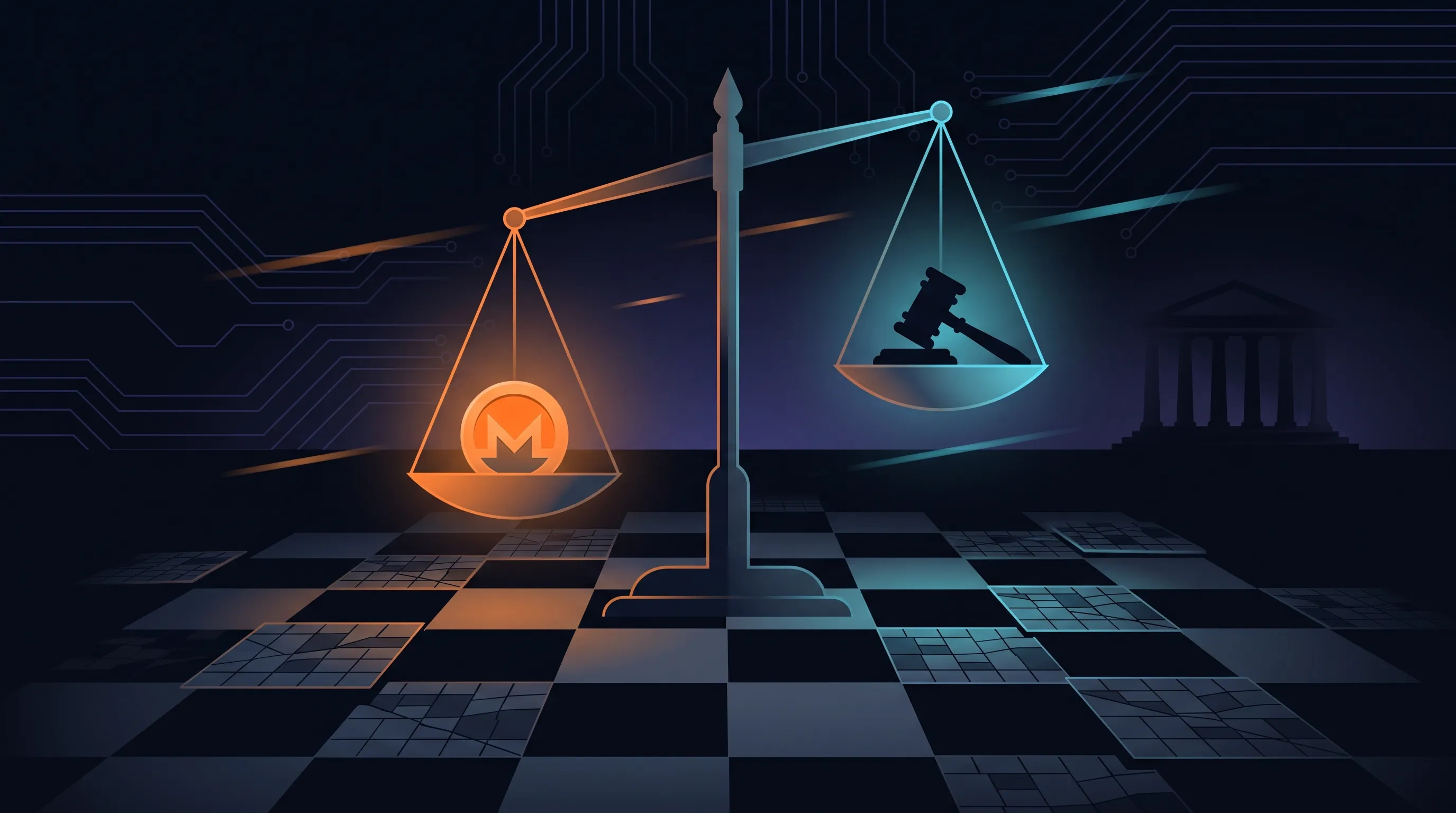
Short answer: Whether you may play is decided by two things: your local gambling law and whether the operator holds a license valid where you are. Monero itself is just money - the legal pressure of recent years hit exchanges, not players. This is orientation, not legal advice.
Short, honest answer: it depends on where you are, and this guide does not give legal advice. What it can do is show you how the pieces fit together - which regulator governs what, what "offshore" actually means, and where Monero genuinely changes the picture. Written for people who found a Monero casino and want to understand what they are looking at.
table of contents
The two questions that decide everything
- Does the operator hold a license that is valid where you are? In legal markets, gambling providers must hold a license to serve or advertise to residents - that is the model of the UK Gambling Commission and comparable bodies [1]. The UK's licensed market alone is measured at £16.8 billion (April 2024 - March 2025) [2], with licensing, player protection and dispute systems attached to that number.
- Does your local law permit you to play? This is independent of the operator's paperwork. Many countries restrict or ban online gambling outright; others permit it under local licensing; a "legal somewhere" license does not make it legal for you [1].
No-KYC crypto casinos are, almost by definition, not licensed in the regulated markets whose rules would give you recourse. That does not automatically make playing illegal where you live - but it does mean the safety net is you.
Regulated markets vs offshore operators
The regulated model looks roughly the same everywhere it exists: a national regulator, licensing conditions, KYC on deposit or withdrawal, geo-fencing by territory, self-exclusion registers and mandatory player-protection tools [1][2]. The offshore model is the industry's other half: operators based in permissive jurisdictions - historically the Caribbean and small European jurisdictions such as Gibraltar, Malta and Alderney [1] - serving players in markets that never authorized them. Offshore does not mean fraudulent; it means unauthorized where you are, with enforcement attention aimed at the operator rather than the player in most such systems.
Our reviews track the license and operator entity behind every listed casino for exactly this reason: "licensed" is a fact, not a vibe.
Where the provider is the target, not the player
Jurisdictions differ on who the law binds. Australia's Interactive Gambling Act 2001 is the clean example: it is an offense to provide interactive gambling services to customers physically in Australia - but not an offense for Australian residents to play poker or casino games online [1]. Provider-targeting is a common pattern; player-targeting exists too, and some countries prosecute both. This asymmetry is why "is it legal?" cannot be answered without a jurisdiction - the same act sits on different sides of different lines.
What Monero changes - and what it does not
The 2024-2025 regulatory pressure on Monero was real but specific: Binance delisted XMR in February 2024 citing regulatory compliance, and a wave of exchange delistings followed, pushing Monero trading toward decentralized and peer-to-peer venues [3]. Read that carefully - the pressure documented everywhere hit exchanges and their listings, not individuals holding or spending Monero. Spending a privacy coin is not, in itself, a gambling offense anywhere; the gambling in "Monero gambling" is what carries jurisdiction, not the Monero. The practical consequence for players is smaller: buying XMR takes the routes in our no-KYC buying guide, and exchange-side friction is a fact of life rather than a legal exposure.
Where Monero genuinely matters is not legality but recoverability: a transparent-chain deposit leaves a public trail that can help in a dispute; a private-chain deposit leaves exactly what the operator's records show. That cuts both ways, and the Monero vs. Bitcoin guide lays out the trade-off honestly.
Taxes and age
Winnings may be taxable where you live, regardless of the currency or the operator's location - privacy coins change the visibility of a transaction, not your declaration duties, and we do not provide tax advice.
Age is the one rule with no grey zone: 18+, or 21+ where local law says so, everywhere, no exceptions. If gambling stops being entertainment, the responsible gambling page lists free and confidential help - that trade-off is part of anonymous play worth stating plainly.
How to check your own situation
- Look up your jurisdiction's online gambling rule - player-side and provider-side [1].
- Check the operator's license and whether it means anything where you live (our reviews document both).
- Check whether your jurisdiction restricts privacy coins at exchange level [3].
- For binding answers, ask a local professional - this page is orientation, not advice.
FAQ
Is Monero itself illegal?
In most jurisdictions no. The documented legal pressure of 2024-25 hit exchanges that listed XMR, not people holding or spending it [3]. A few countries restrict privacy coins at the exchange level - check local rules.
Can I get in trouble for playing at an offshore casino?
It depends entirely on your local gambling law, and this guide deliberately does not guess. Some countries restrict only the provision of gambling, not playing in it; others restrict both [1].
What license should a casino have?
In regulated markets, a local one. Offshore licenses exist in many flavors and do not automatically confer any protection where you live - that gap is the actual story [1].
Do I owe taxes on Monero winnings?
Possibly, depending on where you live - and Monero's privacy does not change your declaration duties. Find local guidance; we do not give tax advice.
Does a VPN change the legal situation?
No - and in regulated markets it can make things worse, because geo-fencing circumvention is exactly what compliance teams look for. See the VPN guide.
Ready to pick a casino? The comparison table has the live values, the finder narrows them down:
Sources
- Wikipedia - Online gambling (legal status by country, licensing, tax havens) - accessed 2026-09-05
- UK Gambling Commission - statistics & research (licensed GB market) - accessed 2026-09-05
- Wikipedia - Monero (exchange delistings 2024-25, regulatory pressure) - accessed 2026-09-05